Following Your First Rugby Sevens Match
Follow your first rugby sevens match with a simple viewing plan for open play, restarts and tackles, so each change in possession is easier to read.
A kick sails towards a cluster of players, and the crowd’s attention moves with it. Following your first rugby sevens match is easier if you decide what to watch at each pause in play: the ball, the support runners or the referee’s signal. Sevens is rugby union played by seven players per side, but the details of restarts and competition rules can depend on the ruleset.
You do not need to identify every player or law. Pick one useful clue for the moment in front of you, then change focus when play changes. It is a little like following a conversation at a busy table: listen to the speaker, then notice who responds.
Where should you look during open play?
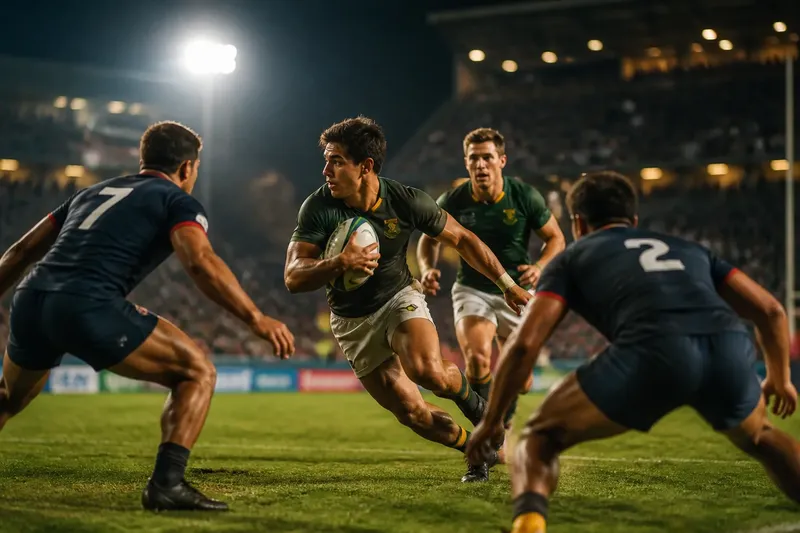
Start with the player carrying the ball, then find the nearest support runner. The carrier may pass, step past a defender or be tackled; the support runner gives you a clue about where the ball might go next.
Next, glance at the defenders nearest the carrier. Notice who steps forward, turns to chase or holds position. These movements help explain why an attack goes wide, cuts back infield or pauses to pass again.
Say you are watching an invented match in which the ball begins near the left touchline and two defenders move towards the carrier. The carrier passes infield to a teammate running behind the first line. The visible result to check is whether that runner has a clear route forward or whether another defender has already moved across to meet them.
What should you follow at a kick-off?
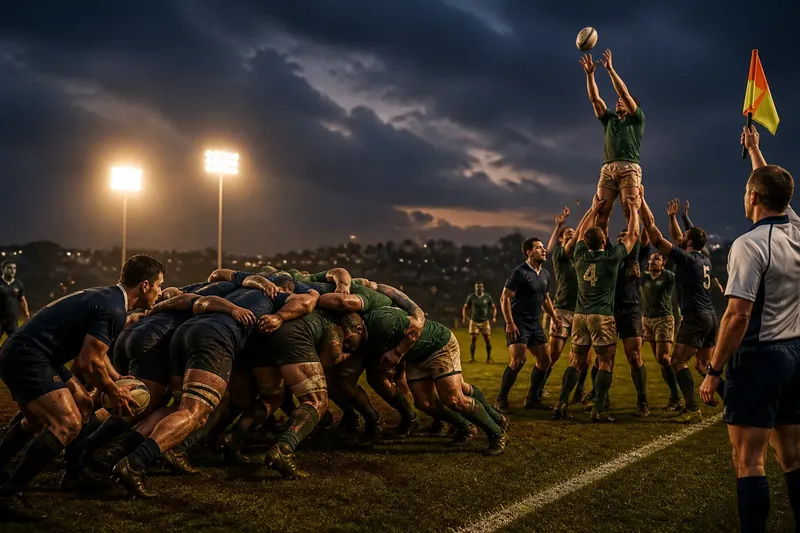
Kick-off procedures and the permitted form of the kick can vary by competition ruleset, so do not assume every restart follows the same pattern. Watch the referee and the officials’ positioning, then follow the ball’s flight and the players moving to collect it.
Once the ball is gathered or otherwise played, identify which team has possession and where its nearest support is. The first pass often makes the new direction of attack easier to see. If the ball is contested, follow the referee’s signal as well as the players; it helps clarify whether play continues or a decision has been made.
What changes after a tackle?
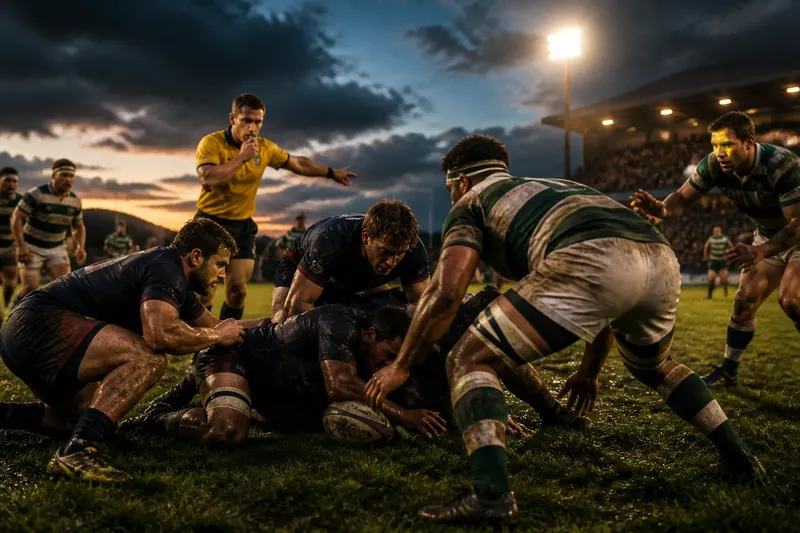
When a player is tackled, look first for the ball and the players arriving at the contact. The tackled player must release the ball, and players from either team may compete for it in accordance with the laws. A referee’s whistle or signal can resolve an unclear contest.
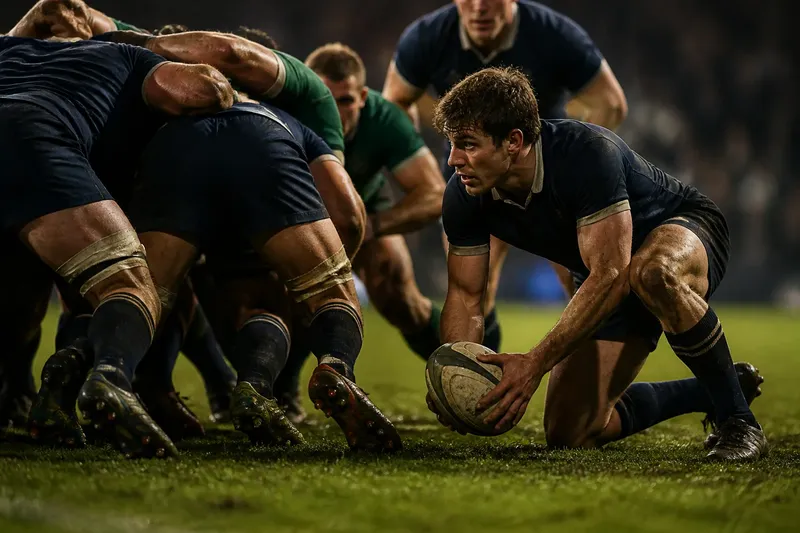
After possession is established, find the player ready to pass and then follow the nearest runners. This shows how the next attack begins without requiring you to track the whole field. If several players gather at the contact, note which teammates remain available farther away.
Which viewing plan suits you?
What if the pace feels too quick?
Follow the ball carrier and one nearby support runner for a few phases. If you lose sight of them, pick up the play again at the next pass or stoppage.
What if you want to understand the attack?
Watch the carrier’s options and the defenders closest to them. Notice whether the attack passes wide, turns back infield or keeps the ball near the contact.
What if a kick-off is hard to follow?
Track the ball’s flight, the player who collects or plays it, and the first pass. Then check the referee’s signal if the restart or contest is unclear.
What if you are watching with experienced fans?
Ask about one specific moment, such as why a pass went infield or why the referee stopped play. A focused question is easier to answer than a request to explain every decision at once.
What should you check when following a phase?
- Check who has the ball; if possession is clear, follow that player, but if it is contested, watch the referee’s signal before choosing a team to track.
- Check where the nearest support runner is; if they are available for a pass, follow their route, but if they are tied up at the contact, look for another option.
- Check whether a defender steps forward; if the carrier is pressured, watch for a pass or a tackle, but if the defender holds position, keep following the carrier’s next move.
- Check whether the referee has stopped play; if there is a whistle or clear signal, listen for the decision, but if play continues, return your attention to the ball.
- Check how the ball leaves a tackle area; if a player passes it away, follow the receiver, but if possession remains unsettled, watch the contest and officiating.
- Check who collects or plays a restart; if one team establishes possession, follow its first pass, but if the outcome is uncertain, use the referee’s signal or commentary to clarify it.
These checks are not predictions. They are ways to decide where to look next, which is a more modest task than forecasting the next score.
How can you read a changing phase?
After a pass, shift your eyes from the passer to the receiver and the players nearby. After a tackle, look towards the contact and then back out to the next available runners. At a restart, begin with the ball’s flight and the officials’ signal.
Sevens leaves fewer players on the field than the fifteen-a-side game, so the action can move quickly from one part of the pitch to another. Keep your viewing plan flexible: if the ball changes direction or play stops, choose a new point of focus rather than trying to reconstruct every movement.
Near the end of a passage of play, look at the player who receives the final pass and the support around them. Then glance back at the preceding pass or tackle. That small rewind often clarifies how the attack reached its finishing position, even if the match gives you no time to admire the grass.
For your next rugby sevens match, choose one cue at a time: the carrier in open play, the ball and signal at a restart, or the release after a tackle. When the next moment becomes confusing, use the referee’s signal or commentary to settle what happened before deciding where to look again.