Scrum or Lineout: Two Ways Rugby Restarts
Scrum or lineout: learn why rugby uses each restart, how the laws shape the contest, and what to watch as the ball returns to play.

The referee whistles after a knock-on, and the forwards gather for a scrum. A few minutes later, a kick sends the ball into touch and the teams form lines beside the mark. Scrum or lineout: each restart follows its own laws and creates a different kind of contest.
What separates a scrum from a lineout?
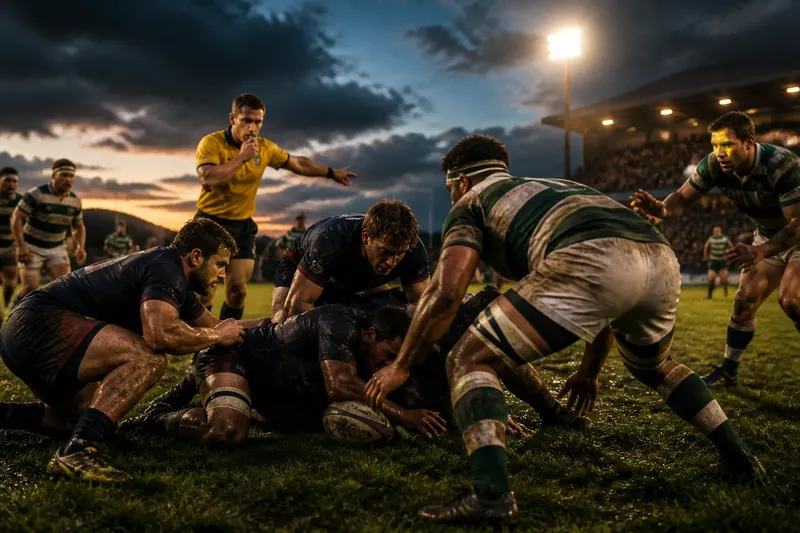
A scrum brings together eight players from each team in a bound formation. The referee oversees the engagement, and the scrum-half must put the ball into the scrum from the correct side and without delay. The front rows contest it, usually with the hooker striking for the ball, while the packs use their feet to move it towards the rear.
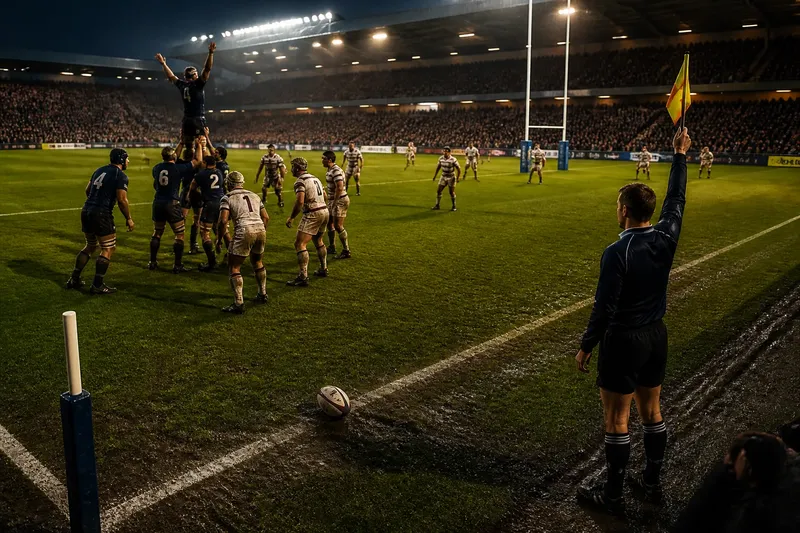
A lineout takes place beside the touchline. Players from each side form parallel lines, with the required gap between them, and an eligible teammate throws the ball between the lines. Players may jump and be lifted to compete for it. The throw must meet the laws for a lineout, including travelling straight along the lineout channel unless the opposition chooses not to compete and the relevant exception applies.
The difference is not simply ground versus air. A scrum is a bound contest over a ball introduced at ground level; a lineout is a contest for a thrown ball. Each has specific formation and procedure rules, so the referee’s signals matter as much as the players’ shapes.
Why does a stoppage produce one restart rather than the other?
The event that stopped play usually determines the restart. A knock-on commonly leads to a scrum, while a ball going into touch commonly leads to a lineout. Other infringements and stoppages have their own prescribed restarts, and some laws give a team a choice between options.
At a lineout, the team entitled to throw is generally the side that did not take or carry the ball into touch. The laws provide exceptions. For instance, a kick directly into touch from inside the kicker’s own 22-metre area can affect which team throws, subject to the circumstances and the applicable rules.
There is no general right to exchange one restart for the other just because a team prefers its scrum or lineout. The referee applies the laws and the relevant competition rules to the incident. If a particular decision seems unclear, the referee’s signal and the mark of touch help explain what is being awarded.
How is a legal scrum formed and played?
The front row consists of two props and a hooker. Locks bind behind them, with the other forwards completing the pack. Before engagement, the referee uses the prescribed sequence and checks that the front rows are ready; players must bind correctly and engage only as directed. Exact procedures can vary by the ruleset, age grade or competition, so a viewer should follow the referee’s instructions rather than assume a universal sequence.
The scrum-half delivers the ball into the tunnel from the side specified by the laws. The ball must be put in without undue delay and in accordance with the required alignment. It is not simply dropped anywhere between the packs. Once the ball is in, the packs contest it with their feet; the scrum-half can play it when it is available at the rear or when the laws otherwise permit.
A scrum that collapses, wheels illegally or becomes unsafe may be stopped and reset or penalised, depending on what happened. The referee’s decision turns on the applicable law and the circumstances, not merely on which pack appears to be moving forwards. A clean, stable scrum lets play continue; an unsafe one does not earn points for enthusiasm.
How can a lineout lead to a catch, a maul or a loose ball?
The throwing team chooses a target and call, subject to the lineout laws. A jumper may compete at the front, middle or back, and teammates can lift or support that player within the rules. The opposing side can contest the throw, so a planned target does not ensure a clean catch.
After a catch, the receiver might pass or carry the ball. A maul can form only when the laws’ conditions are met: the ball-carrier is held by one or more opponents, teammates bind on, and the players remain on their feet. A catcher coming down with the ball does not by itself create a maul. If those conditions are absent, play continues in another form or the referee applies the relevant law.
Imagine a side awarded a lineout near the opposition’s 22-metre line. It calls for a back-of-line target, the throw reaches that jumper, and the jumper passes to a waiting back rather than setting up a maul. The observable result is that the ball moves away from the touchline into open play; defenders may still close down the attack. The call shapes the first contest, while the players’ next actions determine what follows.
What should you watch at each restart?
Start with the reason play stopped, then look at the formation and the first action. These observations help distinguish what the laws require from what a team is trying to do.
- At a scrum: If both packs engage under the referee’s direction and the ball is fed into the tunnel, watch its movement towards the back; if the scrum is stopped for safety or an infringement, follow the referee’s restart decision instead.
- At a lineout: If the throw reaches the intended jumper, watch whether the catcher passes, carries or forms a lawful maul; if it is contested or inaccurate, follow the loose ball and the referee’s signal.
- When the ball enters touch: If the referee awards a lineout, note the mark and throwing team; if a law provides a different restart or entitlement, use the referee’s decision rather than assuming the usual pattern.
- When a scrum is awarded: If the referee directs the standard scrum procedure, watch the front rows and feed; if the competition uses a modified procedure, take the referee’s instructions as the guide.
- Near the try line: If the team keeps possession in a controlled forward contest, watch for a lawful release or grounding; if it sends the ball wide, follow the first receiver and the defensive response.
- When a lineout catcher is held: If teammates bind and the group meets the conditions for a maul, watch its movement; if they do not, treat it as open play and watch for a pass, carry or tackle.
Which questions help explain scrums and lineouts?
Can a team choose a scrum instead of a lineout?
Only if the laws give it that choice in the circumstances. Many incidents prescribe a restart, so a team cannot freely substitute a scrum for a lineout.
Who throws the ball into a lineout?
The team entitled to the throw-in sends an eligible player to throw from the mark of touch. The opposition can compete, and possession remains unsettled until a player gains control or another law applies.
When does a lineout catch become a maul?
A catch alone is not enough. A ball-carrier must be held by opponents, teammates must bind on, and the group must remain on its feet for a maul to exist under the laws.
Can the scrum-half feed the ball wherever convenient?
No. The scrum-half must put it in from the side and in the manner required by the applicable scrum laws. Referees also manage timing and alignment, with procedures that can differ between competitions and age grades.
How can you read the restart without predicting the whole move?
Listen for the whistle, identify the mark and watch the referee’s signal. At a scrum, follow the feed and the ball’s progress through the pack. At a lineout, note the throw, the target and whether the receiver controls the ball.
The phrase “scrum or lineout” is useful because it names two distinct legal procedures, not because either decides possession in advance. Think of them as different doorways into play: one opens through a bound contest, the other through a throw-in. The laws set the doorway; the next useful clue is whether the ball is controlled, contested or stopped by the referee.