The Myth That Territory Always Means Control
Rugby territory does not always mean control. Read field position alongside possession, restart choices and scoring pressure to judge who is shaping the match.
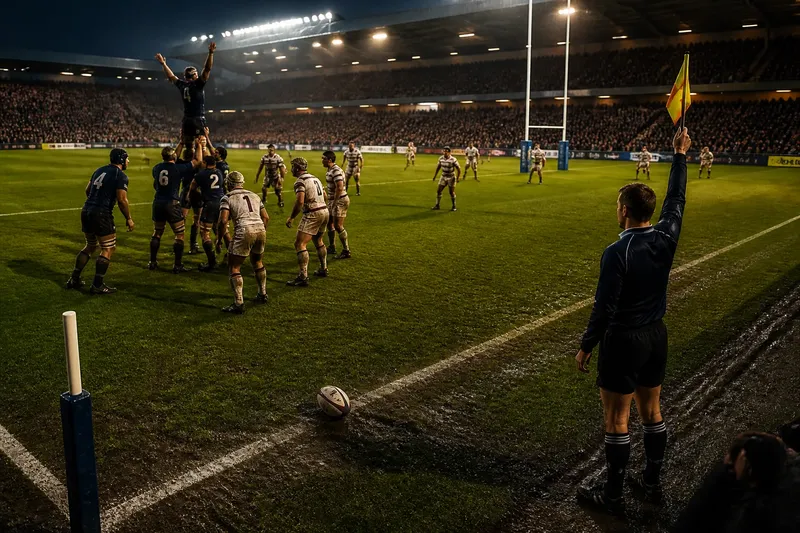
A rugby kick lands near the opposition goal-line and rolls into touch. The crowd approves; the touch judge signals the lineout. One side has gained territory, but the other gets the throw. To tell who controls the next passage, watch what the restart allows each team to do.
Rugby territory does not always mean control. Territory is where play is taking place; control is the ability to shape the next contest. A team can move the ball far upfield without regaining possession, while another can hold the ball in its own half and choose when to carry, pass or kick.
What does territory tell you?
Field position locates the next contest in relation to halfway and the goal-lines. Playing in the opposition half can create room to attack or make a scoring attempt more plausible. It can also leave a team defending a lineout it does not throw in to.
The restart matters. A kick into touch usually gives the opposing team the lineout throw, while a penalty kick to touch gives the kicking side the throw-in under the relevant laws. Either way, a favourable position is an invitation to compete, not possession already secured.
Think of territory as the address on an envelope: it tells you where the action has arrived, not what is inside it. The location changes the stakes of the next decision, but does not settle its quality.
How do restart choices change the picture?
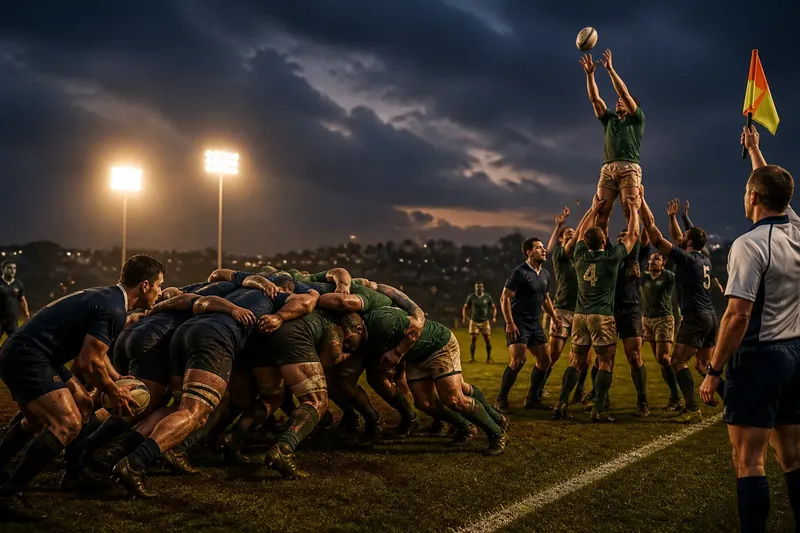
After a kick to touch, note who throws in and what kind of lineout follows. A team may call a straightforward catch-and-drive, lift the ball to a receiver at the back, or use a short throw to move play quickly. The opposition can contest the throw or prepare to defend the expected first move.
For a kick that stays in the field, watch the receiver and the players chasing. A clean catch with room to run can turn apparent territorial progress into a counter-attack. A receiver forced to make a hurried pass or kick has fewer comfortable choices, even if the kicking side has not recovered the ball.
A penalty also offers choices. Depending on the position and match situation, a side can kick for touch, attempt a shot at goal, or take a quick tap. Each option changes the likely next contest: a lineout, a restart after a successful shot, or open play before the defence has fully organised.
What does control look like beyond possession?
Possession is a fact; control is the range of useful actions available to the team with the ball. A side may retain it through several carries but keep running into a settled defensive line. Another may have only a brief spell before making defenders turn, creating room for a pass or drawing a penalty.
Listen and watch for the shape of the contest rather than counting phases. Is the attack able to choose between a carry, a pass and a kick, or is it forced into one hurried option? Is the defence being asked to retreat, turn or cover a new threat? Those changes show whether a team is making the opponent respond.
Control can also belong briefly to a team without the ball. A connected defensive line that advances together may narrow the carrier’s choices and provoke a loose pass or a kick under pressure. That is not the same as having possession, but it can set up the next opportunity.
How should you judge a kick, lineout or penalty?
For each decision, compare what the team wanted with what the restart or next passage actually offered. A kick that gains ground but gives the receiver ample time may be less useful than one that keeps the ball in play and makes the receiver turn towards pressure.
Use these checks to keep the judgement tied to what happens next:
- Touch kick: Check which side has the lineout throw. If the kicking side has it, look for a planned first phase; if the opponent throws in, watch whether the kicking side can disrupt the catch or defend the first carry. If neither side can make the next contest difficult, treat the ground gained as position rather than control.
- Kick kept in play: Check whether the receiver has room to run. If there is space, expect a counter-attack and watch whether the kicking side can cover it; if the receiver is under pressure, watch for a rushed clearance or pass. If the chase is broken, the kicker’s side should reset rather than assume the kick has worked.
- Penalty to touch: Check the resulting lineout location and who throws. If the kicking side throws in, it can attempt a set-piece attack; if it fails to secure the ball, the field position remains but possession changes. If the position is poor for a lineout attack, the side may prefer a different penalty option.
- Shot at goal: Check whether the team has chosen points over a lineout or open-play opportunity. If the attempt succeeds, play restarts from halfway; if it misses, follow the applicable restart and who can next play the ball. If the team needs a different kind of pressure, the shot may not serve that aim.
- Quick tap: Check whether defenders are still retreating and whether teammates are close enough to support. If the route is open, the carrier may keep play moving; if defenders are set or support is absent, expect the attack to be contained and watch for a safer next option.
- Lineout catch-and-drive: Check whether the attacking pack forms around the catcher and whether the defence can halt the drive. If the drive moves forward or draws defenders in, the attack may create another option; if it stalls, the side should look for a pass or a controlled restart rather than treat the initial catch as progress.
These checks do not turn every decision into a verdict on its own. They separate the immediate gain—such as a better lineout position—from the more useful question of which side can make the next meaningful choice.
What questions help you read territory and control?
Does a team in the opposition half control the match?
Not by position alone. Check who has the ball and whether that side can choose its next action, rather than simply waiting for a kick or turnover.
Can a team control play while defending near its own line?
It can shape a spell without controlling the location. If it secures the ball and clears pressure deliberately, it may manage the contest well despite starting deep.
Does a successful kick count as control?
Only in context. Field position, the receiver’s options and the restart all affect what the kicking side can do next.
What should you watch when possession changes?
Check how the new carrier uses the space and whether the other side can recover its defensive shape. A turnover can make a team near its own line dangerous if the opponent is out of position.
How does one passage turn ground into pressure?
Imagine a side in its own half wins a penalty and kicks to touch. It gains a lineout throw deeper in the opposition half, wins the catch, then sends a forward into a set defence. The first carry makes little progress, and the next pass reaches a player with no clear route forward. The side has improved its location, but the defence has so far limited its choices.
Now suppose the attack moves the ball away from the crowded channel and makes defenders turn to cover a wider route. The observable result is not automatically a scoring chance, but the defence must adjust and the attack has created more than one possible next action. If the pass is intercepted or the attack is pushed into a hurried kick, the lineout position has not become control.
When does territorial pressure become control?
Territorial pressure becomes control when a side repeatedly makes the opponent respond on unfavourable terms. A lineout win followed by a well-directed attack can force the defence to retreat or concede a penalty. A kick chased in a connected line can make the receiver clear hurriedly. In either case, judge the result by the choices that remain, not by the distance the ball travelled.
Rugby territory is useful because it changes where the next contest begins. To decide whether it has become control, watch who can select the next kind of play, what the opponent is being forced to do, and whether that pattern continues through the next restart. A long kick tells you where the ball went; the next decision tells you who is shaping the match.