The Scrum-Half’s Changing Role in Rugby
The scrum-half’s changing role in rugby explained through feeds, passes, runs and kicks, so you can follow the decisions that shape each attack.

A scrum-half crouches behind a scrum, watches the ball emerge and decides whether to pass to the fly-half or keep it close. The scrum-half’s changing role in rugby is easiest to see in these moments of choice: the position is defined not only by passing, but by how the player manages the ball at set pieces and in open play.
The number nine has distinctive tasks at the scrum, lineout and base of a ruck. Those tasks call for different footwork, timing and decisions. They are also why the role cannot be reduced to delivering the ball to the same receiver every time.
What does a scrum-half do at set pieces?
At a scrum, the scrum-half feeds the ball and watches how it travels through the contest. If their team wins possession, the number eight may control the ball at the back, leaving the scrum-half to pass to the fly-half, a forward or another nearby option. The right choice depends on how the ball comes out and where the opposing players are positioned.
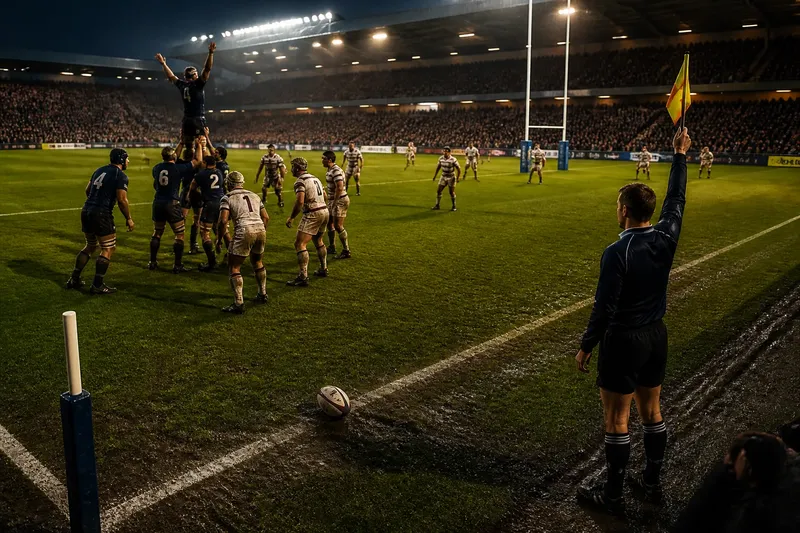
At a lineout, the scrum-half usually waits to collect the ball after a teammate taps or passes it away from the throw. The player must be ready for the ball to emerge on either side of the contest. From there, the scrum-half can pass, carry or kick, depending on the attacking shape and the defence.
These set-piece duties differ from the familiar picture of a scrum-half beside a ruck. The player is not merely waiting to distribute: they are involved in starting possession at a scrum and preparing to receive it at a lineout.
How does the scrum-half choose a pass?
A pass is useful only if its receiver can do something with it. The scrum-half considers the ball’s position, the receiver’s readiness and the route defenders can take to close down the attack. A pass to the fly-half may open options across the backline; a short pass to a forward can keep play near the scrum or ruck.
The delivery matters, too. A pass that arrives behind a moving receiver may force them to turn or slow down. A clean pass to the hands lets the receiver act without first correcting the ball’s path. The scrum-half’s judgement is therefore visible in both the choice of receiver and the quality of the delivery.
Say a team wins a scrum near the middle of the pitch. The ball reaches the number eight cleanly, the fly-half is set behind the backs, and an opposing defender has moved forward to pressure that receiver. The scrum-half passes to a forward running close to the scrum instead. The observable result is that the forward receives the ball while the defender must adjust their line; the trade-off is that the attack stays close and may not use the wider backs immediately.
When does the scrum-half run or kick?
A run can be the better choice when the scrum-half sees room beside the base or when a defender is positioned to stop a predictable pass. Carrying the ball may also make a defender commit, allowing the scrum-half to pass to a teammate afterwards. It carries a cost: if support is not ready, the player can be tackled before the attack has a clear next option.
A kick changes the ball’s location without sending it through a conventional pass. A box kick is a high kick from near the base of a ruck, generally paired with a chase by teammates. Other kicks may be directed towards open space or behind the defensive line. The decision depends on available room, the chasing players and the likely consequences of giving the opposition a chance to recover possession.
These choices suit different situations. A run keeps the scrum-half involved as a ball-carrier; a kick sends teammates towards a contest elsewhere; a pass gives the ball to a player already positioned to act. None is automatically the right answer.
What does the scrum-half watch at a ruck?
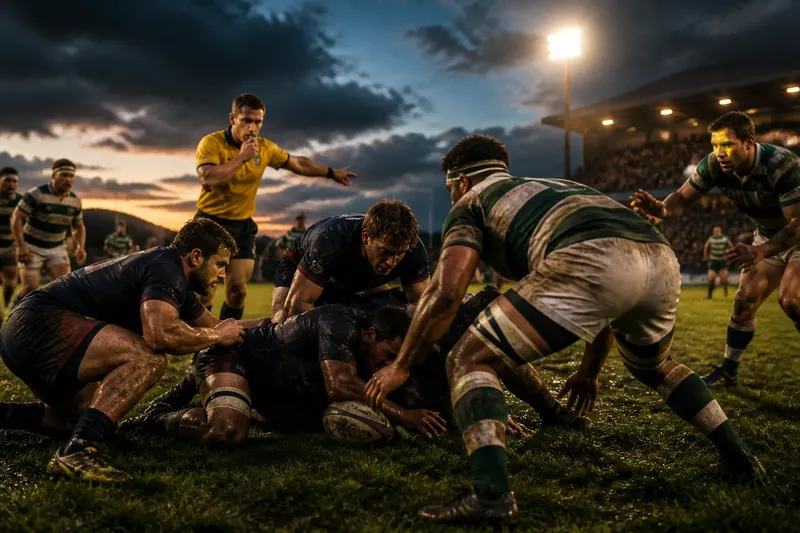
At a ruck, the scrum-half needs to identify whether the ball is available and where it can be played from. They also watch how defenders are arranged, but the position brings a particular practical concern: reaching the ball and setting up a clean delivery without getting in the way of teammates or the contest.
If the ball is awkwardly placed, the scrum-half may need to adjust their position or wait for a teammate to make it playable. If it is ready and receivers are set, the player can act quickly. A pause can be a deliberate part of organising the next action, not evidence that the scrum-half has run out of ideas.
Think of the scrum-half as the person turning a tap: the ball has to be available before it can flow, and opening it in the wrong direction is not especially helpful. The forwards’ work at the contest and the backs’ readiness both shape what the number nine can do.
How does the role change across a match?
The scrum-half’s starting position changes with the phase. At a scrum, the player feeds from the side and then prepares to receive the ball back. At a lineout, they stand ready to collect the ball from the contest. In open play, they move towards wherever the ball becomes available.
The number nine also has defensive duties. Depending on the team’s plan, the scrum-half may cover space near the breakdown or join the defensive line. Their assignment can change with the location of the next play, so the position is not limited to attacking passes.
Across a match, the scrum-half may alternate between serving as a distributor, taking a short run, organising a set-piece move and kicking for a chase. The role remains recognisable because the player repeatedly handles the connection between a contest for possession and the next action.
What should you watch to understand the scrum-half?
Follow the player before and after the ball arrives. Note where the scrum-half stands at a scrum or lineout, whether the ball is ready at a ruck, and which players are set to receive it. These details help explain the decision without treating every pass, run or kick as an isolated event.
- At a scrum, check whether the ball reaches the number eight cleanly; if it does, watch for a quick pass, and if it does not, expect the scrum-half to adjust to the slower ball.
- At a lineout, check which side the ball emerges on; if it comes towards the scrum-half, watch for a pass or carry, and if it goes elsewhere, track how the player repositions.
- At a ruck, check whether the ball is visibly available; if it is ready, watch which receiver is chosen, and if it is trapped or messy, look for a delay while teammates make it playable.
- Before a pass, check whether the fly-half and backs are set; if they are ready, watch for a pass out, and if they are not, look for a short option or a pause.
- When the scrum-half carries, check whether a defender has moved across to meet them; if so, watch for a pass after the defender commits, and if not, note whether the scrum-half continues into the space.
- Before a kick, check whether teammates are positioned to chase; if they are, follow their pursuit, and if they are not, watch whether the scrum-half chooses to keep possession instead.
The most revealing detail is often the scrum-half’s position before the ball arrives: close enough to collect it, but set to reach the next option. Watching that small adjustment makes the changing role of the scrum-half in rugby easier to understand, from a feed at the scrum to the decision that starts the next attack.
What questions do viewers ask about the scrum-half?
Does the scrum-half always pass to the fly-half?
No. The player may pass to a forward or another teammate, carry the ball or kick. The choice depends on the ball, the available receivers and the defensive arrangement.
Why does the scrum-half feed the scrum?
The scrum-half puts the ball into the scrum to begin the contest for possession. After the feed, they watch how the ball moves and prepare for the next action if their team wins it.
What is a box kick?
It is a high kick made from near the base of a ruck, commonly accompanied by a chase from teammates. It sends the ball towards a different contest rather than passing it to a receiver beside the scrum-half.
Does the scrum-half defend?
Yes. The scrum-half has defensive responsibilities like the other players, though the exact position and assignment depend on the team’s plan and where play is developing.