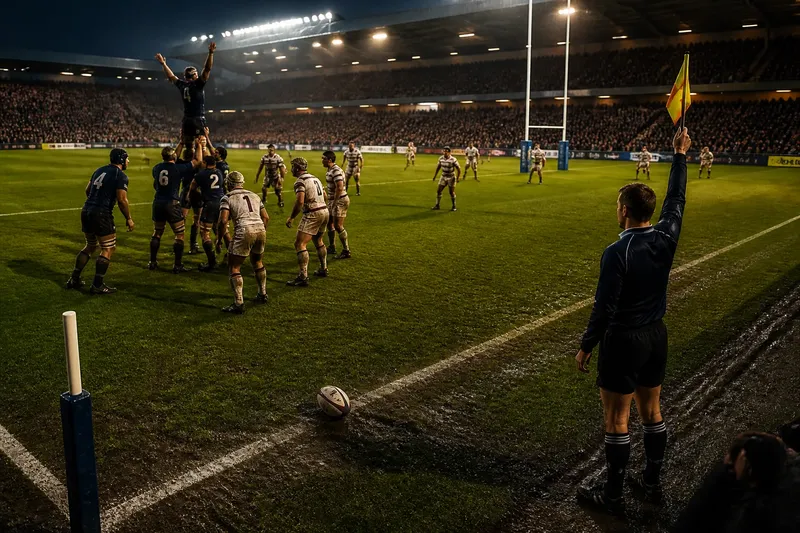
How to Read a Rugby Breakdown Without Misreading the Contest
Learn how to read a rugby breakdown by separating legal contest, ball availability and the next decision, so the referee’s call and play are easier to follow.
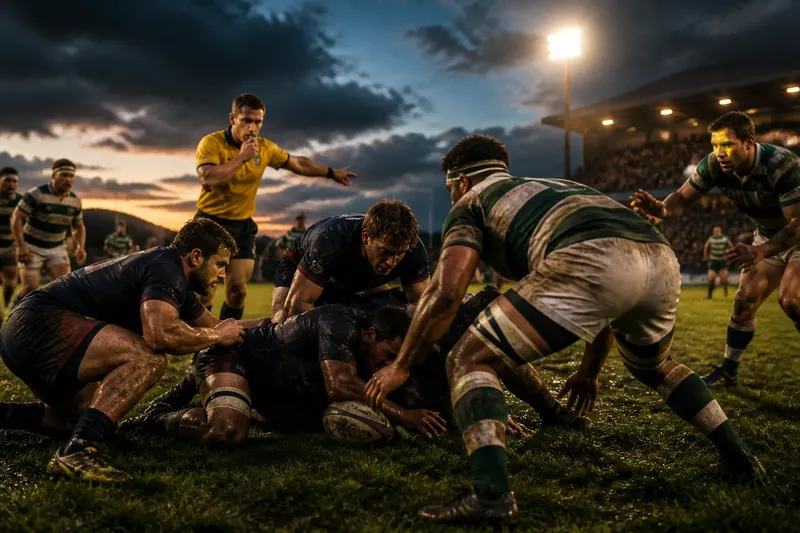
A whistle cuts through the noise after a tackle, and one team jogs away with the ball while the other looks at the referee. To read a rugby breakdown, separate three questions: is the ball available, are players contesting it legally, and what happens once it is played?
What counts as a breakdown?
In ordinary commentary, “breakdown” means the contest around a tackle as players try to secure or win the ball. Under the laws, the tackle and the ruck are distinct situations. A ruck forms when at least one player from each team, on their feet and in contact over the ball on the ground, engage in the contest.
That distinction matters. Before a ruck forms, players may be able to play the ball with their hands if they meet the relevant tackle and offside requirements. Once a ruck has formed, players must not use their hands to play the ball; they contest by driving opponents away or pushing over the ball. The referee’s decision depends on the actual situation, not on whether the scene looks like a heap of bodies.
How can players contest the ball legally?
At the tackle, the tackled player must release the ball and move away or otherwise make it playable. The tackler must release the tackled player and move away or get up before playing the ball again. Other arriving players must enter from behind their own offside line, commonly described as coming through the gate, and remain on their feet while they compete.
A player may bind on a teammate or opponent in the ruck, but simply standing over the ball does not settle the contest. A defender cannot reach in with hands after the ruck has formed. Conversely, an attacker’s balanced position does not make every action legal: players must obey the entry, binding, offside and other applicable laws. The referee judges those actions as they happen.
The ball also has to become playable. If it is trapped under players or a player falls across it, the referee may call “use it” when the ball is at the back of a ruck and available. The team then has to play it promptly under the law. If the ball is genuinely unplayable, the referee has to decide how play restarts under the circumstances.
What should you watch at the contact?
- Entry: If an arriving player comes from behind their team’s offside line, watch for a legal contest; if they enter from the side, expect a possible penalty and note whether the referee stops play.
- Feet: If a player stays on their feet while bound or competing, they may remain involved; if they fall and obstruct the ball or opponent, watch for the referee’s decision and the resulting restart.
- Hands: If no ruck has formed and the tackle laws permit it, a player may play the ball; if a ruck has formed, watch for hands to be withdrawn and for the contest to continue without picking the ball up.
- Tackled player: If the ball is released and the player moves clear, the next contest can develop; if the player holds on or obstructs access, watch for a penalty or a call for the ball to be made available.
- Ball position: If the ball is visible at the back of the ruck, the attack can prepare to play it; if it is trapped, watch for “use it” or an unplayable-ball decision rather than assuming either side has secured it.
- Offside line: If defenders retreat behind the line through the hindmost player in the ruck, they can defend the next phase; if they advance from in front of it, watch for a possible offside penalty.
Why can a legal-looking brace still be penalised?
A low, stable body position can help a player resist pressure, but posture alone does not establish a legal contest. The player must enter from the correct direction, stay on their feet, bind where required and avoid actions such as collapsing or obstructing opponents. A referee may penalise an infringement even if the player appears to be protecting the ball effectively.
Think of a crowded doorway: standing firmly in it does not grant permission to block everyone else. In a ruck, the relevant question is not simply who holds the ground, but whether each player arrived and acted within the laws.
What changes when the ball is played?
Once the ball is out, both teams reorganise. The attacking side may have committed players to secure possession; the defence may have committed players to contest it. Those choices affect the number of available runners and defenders, but they do not dictate a single next move. The attack might pass, carry or kick, depending on its shape and the opposition’s line.
Say an invented club’s scrum-half sees the ball clearly at the back of a ruck, with two defenders still retreating and a team-mate waiting wider. The scrum-half plays the ball to that team-mate, who can attack the space before the line is fully set. If the defenders are already aligned, the same pass may meet a set tackle instead; the useful observation is the defenders’ position at release, not a rule that fast ball must succeed.
Which breakdown questions help explain the referee’s call?
Can a player pick up the ball in a ruck?
No. Once a ruck has formed, players must not play the ball with their hands. They can contest by driving or pushing, while the ball is played after it leaves the ruck.
Does the first player over the ball win possession?
No. Arrival order alone does not decide possession. Entry, footing, binding, the state of the tackle or ruck, and the referee’s view of the actions all matter.
What does “use it” mean?
It is the referee’s instruction when the ball is at the back of a ruck and available to be played. The team in possession must then play it promptly under the law.
Why might the referee award a penalty?
Possible causes include an illegal entry, offside, hands used after a ruck forms, failure to release, or a player going to ground and obstructing play. Watch the referee’s signal and the direction of the award to see which team benefits.
For a clearer read, track the ball’s status first: tackle, ruck or available ball. Then check how players entered and whether they stayed on their feet. That small sequence makes the referee’s call easier to follow, even when the bodies leave very little of the ball visible.